


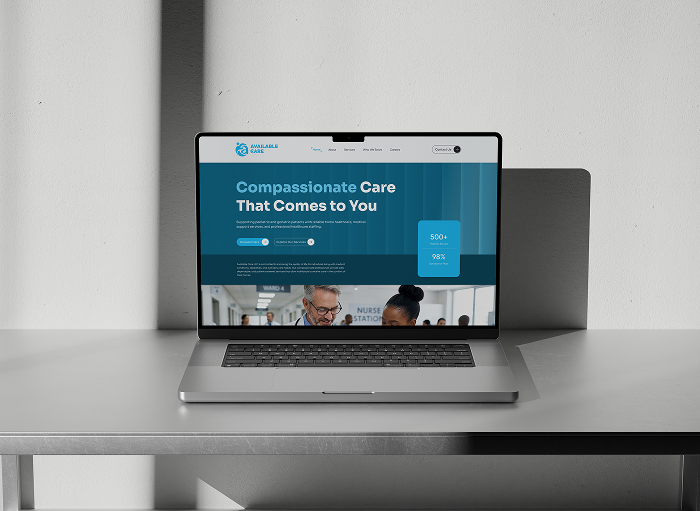


Patient systems migrated to HIPAA-ready cloud architecture with encrypted storage, role-based access, and multi-region disaster recovery — improving clinical availability and system performance.
- HIPAA-compliant cloud environments
- PHI encryption at rest and in transit
- Telehealth infrastructure at scale
- Disaster recovery with defined RPO/RTO SLAs

Secure, high-performance cloud environments for banks, FinTechs, and financial institutions — with fraud detection infrastructure, transaction security, and regulatory compliance built in from day one.
- PCI DSS compliant cloud architecture
- Fraud detection systems at cloud scale
- Transaction encryption and monitoring
- Multi-region failover for zero downtime

High-growth SaaS platforms need instant scalability, global availability, and fast deployment cycles. We deliver Kubernetes orchestration and multi-cloud failover across AWS EKS, Azure AKS, and Google GKE.
- Kubernetes orchestration at enterprise scale
- Multi-cloud failover architecture
- CI/CD pipeline acceleration with DevOps
- Auto-scaling for demand spikes

Legacy manufacturing systems integrated with real-time cloud analytics and IoT data processing — delivering operational visibility, predictive maintenance alerts, and measurably reduced production downtime.
- Smart Factory cloud platform integration
- IoT data processing and edge computing
- Predictive maintenance analytics
- Real-time OEE and operational dashboards
Enterprise cloud computing services are large-scale IT solutions that deliver computing power, storage, networking, security, and application hosting through AWS, Microsoft Azure, and Google Cloud Platform. Unlike basic hosting, enterprise cloud services are designed for mission-critical workloads, high availability (99.9%–99.99%), regulatory compliance (HIPAA, SOC 2, PCI DSS, ISO 27001), multi-region disaster recovery, hybrid and multi-cloud architectures, and Zero Trust security models.
Enterprise cloud migration costs vary based on application complexity, data volume, compliance requirements, downtime tolerance, and re-architecture needs. Typical US market ranges: small enterprise $10,000–$50,000; mid-scale $50,000–$250,000; large enterprise transformation $250,000–$1M+. Most enterprises reduce infrastructure costs by 30–45% within 12–18 months through FinOps optimization and workload rightsizing — often recovering migration investment within the first year.
There is no universal best cloud — selection depends on your enterprise architecture. AWS excels for global scalability and cloud-native services. Azure is strongest for Microsoft ecosystem integration and enterprise hybrid cloud. GCP leads in data analytics, AI/ML, and Kubernetes-native architecture. Most large organizations adopt a multi-cloud strategy to reduce vendor lock-in, improve resilience, and optimize cost-performance balance — which is exactly what CloudMatrix Tech specializes in.
Timelines depend on workload complexity. Simple workloads: 2–6 weeks. Mid-level enterprise systems: 2–4 months. Large multi-system environments: 6–12+ months. Our SCALE™ framework includes six phases: Discovery, Assessment, Strategy, Execution, Optimization, and Governance. Structured migration with this approach reduces downtime by 70%+ compared to unplanned migrations.
FinOps (Cloud Financial Operations) is a framework that helps enterprises control and optimize cloud spending. It provides real-time cost dashboards, resource rightsizing recommendations, department-level budget governance, predictive spend forecasting, and automation policies like auto-scaling and scheduled shutdowns. Enterprises using FinOps typically reduce cloud waste by 20–40%, transforming unpredictable cloud bills into managed, strategic business intelligence.